

Introduction
Ganesh Visarjan, the immersion of Lord Ganesha’s idol, is one of the most significant rituals concluding the vibrant festival of Ganesh Chaturthi. While the event is traditionally about bidding farewell to Lord Ganesha, it also carries deep spiritual symbolism—reminding devotees about the cyclical nature of life, detachment, and renewal. For children, participating in Ganesh Visarjan can be more than a cultural experience—it can be a chance to learn life values, spiritual lessons, and sustainable practices in a fun and engaging way.
In this comprehensive guide, we will explore how to celebrate Ganesh Visarjan with children, highlighting ways parents and educators can use this sacred festival to impart timeless values of respect, devotion, community service, sustainability, and mindfulness. We’ll also look at age-appropriate activities, creative ideas, and practical tips for involving children meaningfully in the celebration.
The Significance of Ganesh Visarjan
Before involving children in rituals, it is essential to explain the meaning behind them in simple terms:
- Symbol of Impermanence: Ganesha’s immersion teaches that nothing in life is permanent, and change is natural.
- Cycle of Creation and Dissolution: The idol made from clay returns to nature, symbolizing life’s eternal cycle.
- Letting Go: Visarjan encourages us to release attachments and trust the divine order.
- Unity and Celebration: Communities come together during Visarjan, emphasizing unity, devotion, and joy.
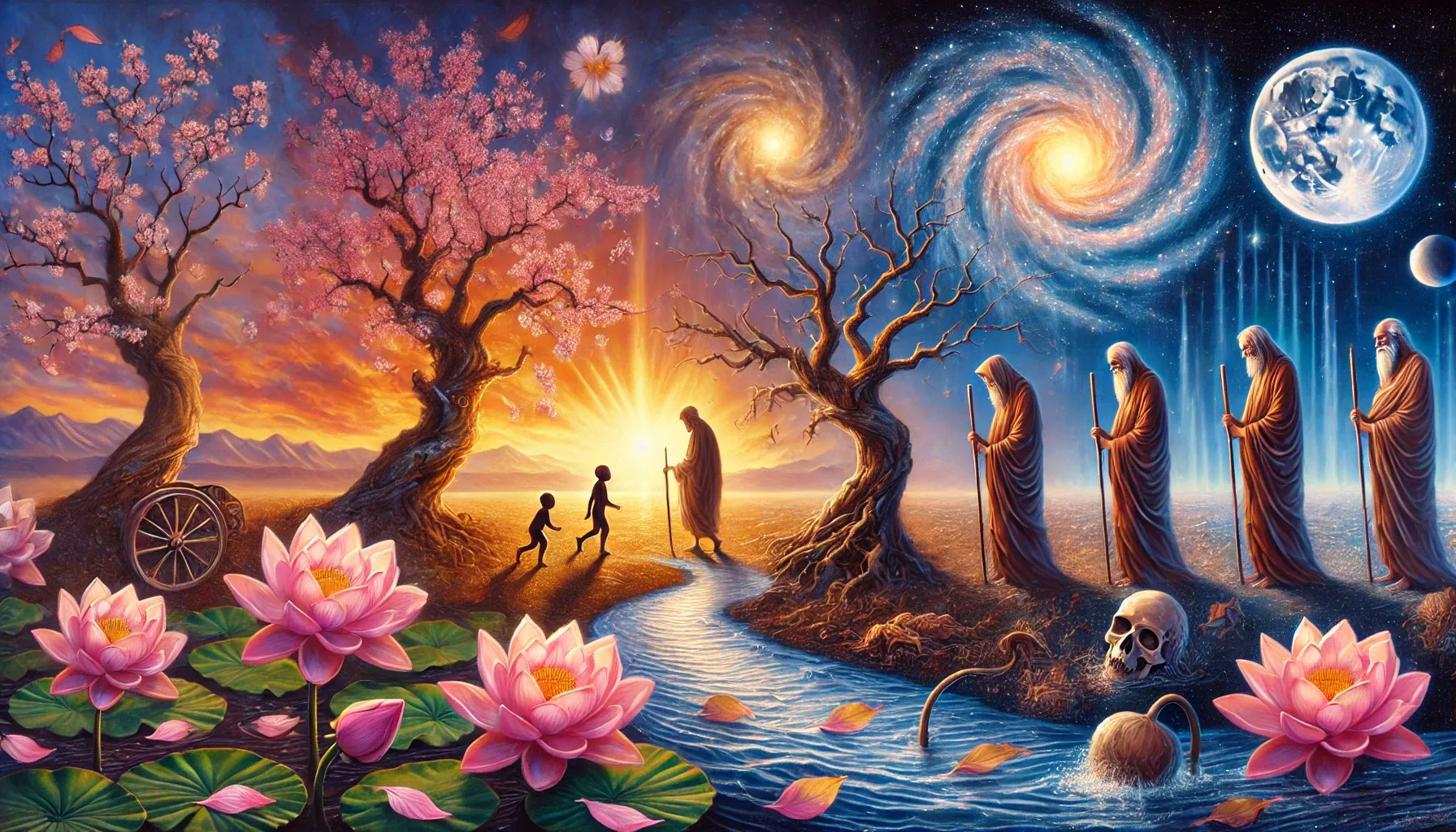
When children understand these lessons in age-appropriate ways, the ritual becomes more than a spectacle; it becomes a life-learning opportunity.
Preparing Children for Ganesh Visarjan
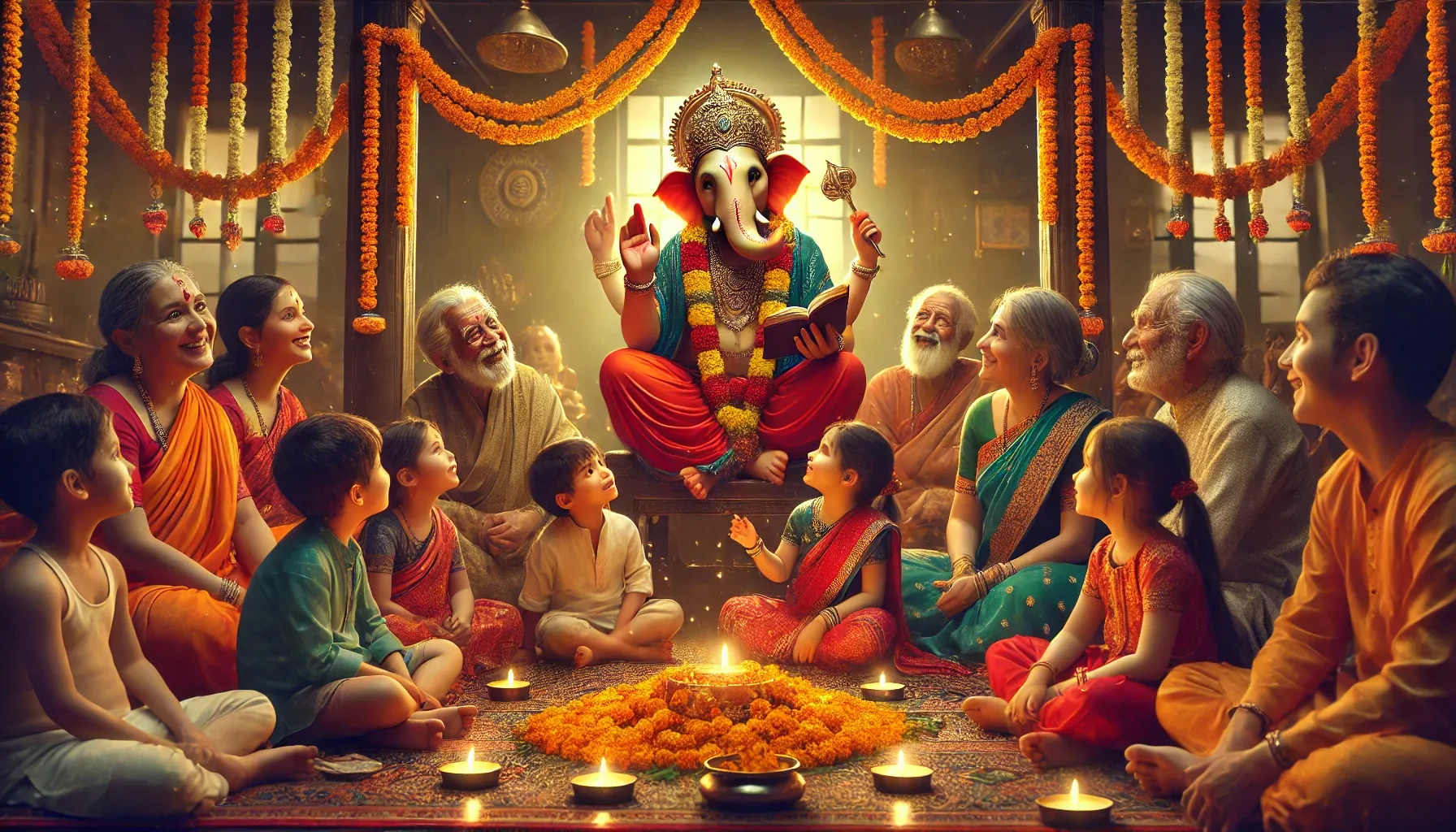
- Storytelling Sessions
Share stories of Lord Ganesha’s wisdom, humility, and playfulness. Children love stories, and relating the ritual to his qualities helps them connect emotionally. - Explaining Rituals Simply
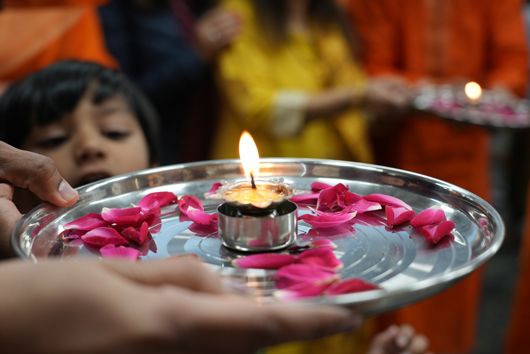
Instead of presenting rituals as rigid rules, explain the meaning behind each—why we do aarti, why we offer modaks, and why immersion happens. - Encouraging Questions
Allow children to ask questions about the rituals. This curiosity leads to deeper understanding and active participation. - Involving Them in Preparation
Let children help in preparing offerings, arranging flowers, decorating the idol, or even making eco-friendly idols from clay.
Teaching Values Through Ganesh Visarjan
1. Respect for Nature and Sustainability
- Eco-Friendly Idols: Teach children about the importance of clay idols over Plaster of Paris (POP). Let them participate in making their own small idols from natural clay.
- Natural Decorations: Use flowers, leaves, turmeric, and rice powder instead of plastic decorations. Children can collect and arrange them creatively.
- Water Conservation: If immersing at home, explain how to do it in a bucket or tub, showing respect for natural water bodies.
Value Taught: Environmental responsibility and care for nature.
2. Detachment and Letting Go
- Children can form bonds with the idol during the festival. The act of Visarjan teaches them that while love and devotion are important, attachment should not hinder growth.
- Explain how letting go doesn’t mean forgetting but cherishing memories while moving forward.
Value Taught: Balance between attachment and detachment.
3. Devotion and Faith
- Encourage children to sing bhajans, perform aarti, or chant simple mantras.
- Help them express prayers in their own words—thanking Ganesha for blessings or asking for guidance.
Value Taught: Faith, gratitude, and spiritual expression.
4. Community and Sharing
- Involve children in distributing prasad (offerings) to neighbors or those in need.
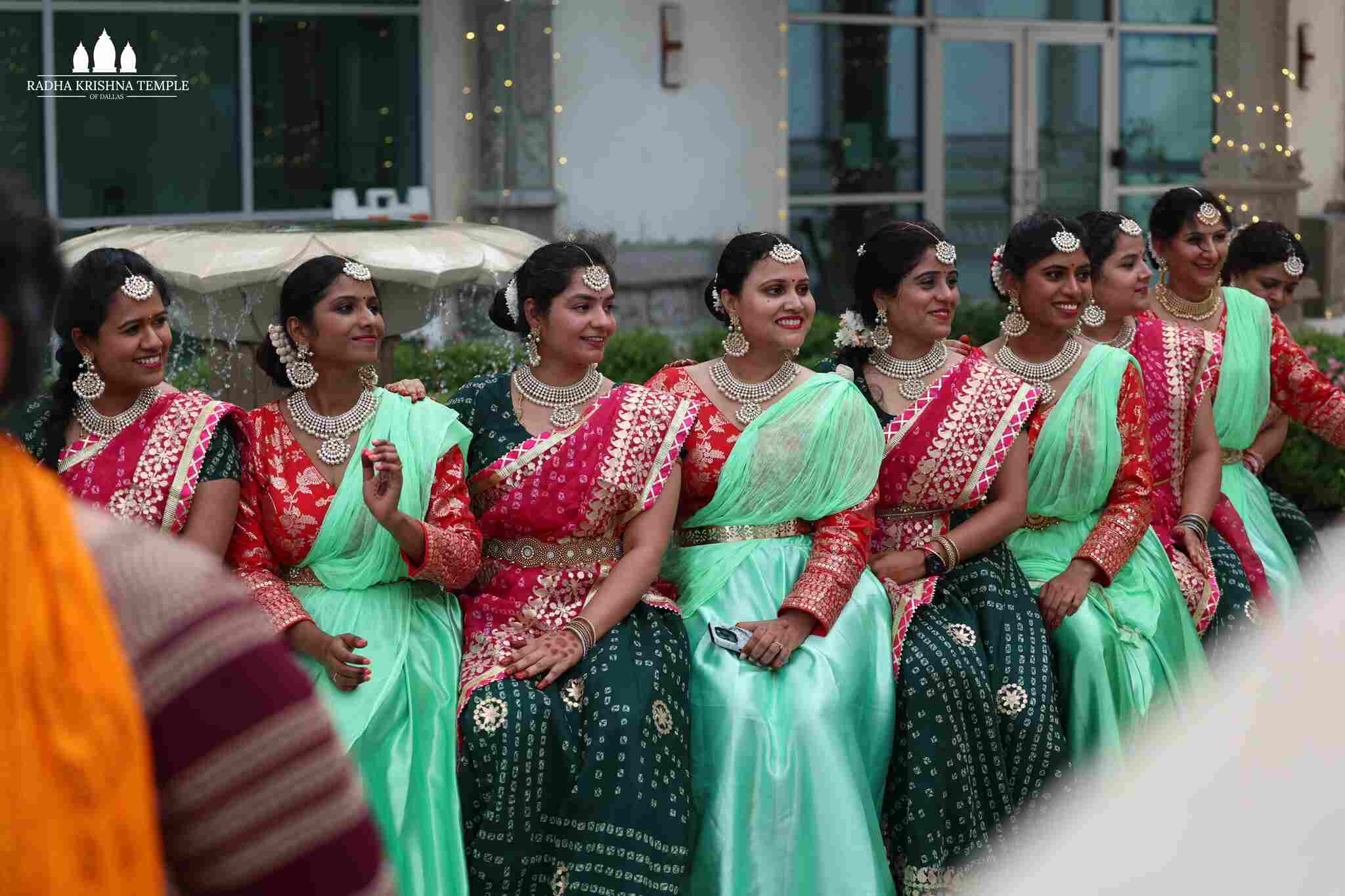
- Encourage participation in community celebrations, where they learn the value of cooperation and teamwork.
Value Taught: Service, kindness, and unity.
5. Joyful Participation
- Children learn that rituals are not duties to be feared but celebrations of joy, music, and togetherness.
- Dancing, singing, and playing traditional instruments during processions make them associate tradition with happiness.
Value Taught: Joy in tradition and cultural pride.
Practical Activities for Children
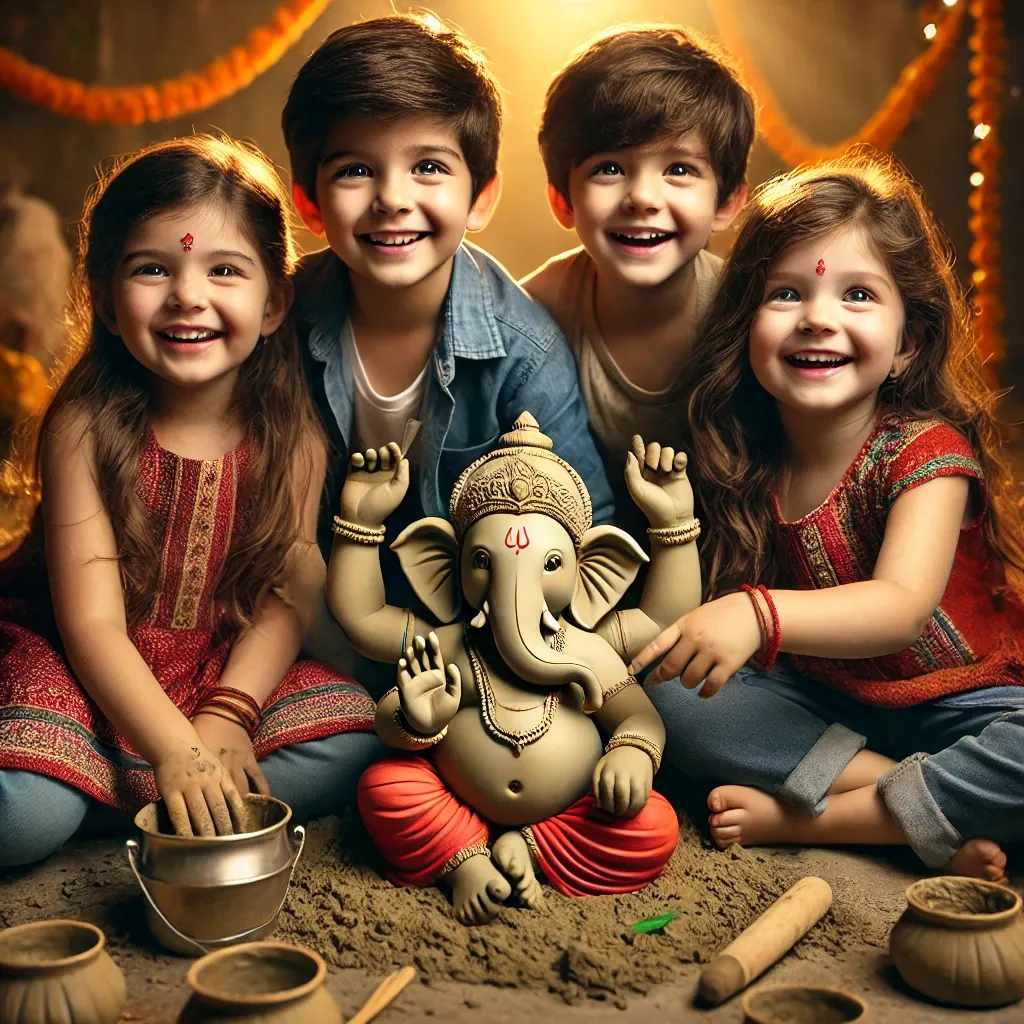
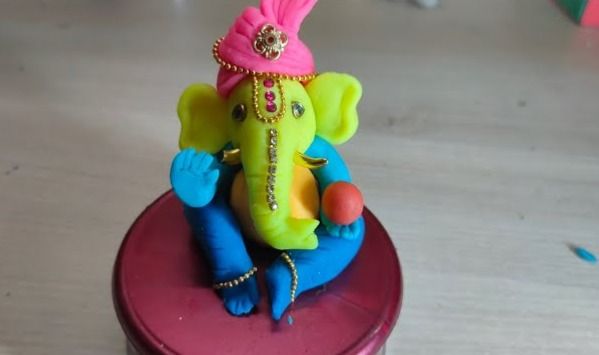
- DIY Clay Idol Workshop
Organize a clay modeling session where children sculpt their own Ganesha idols. This fosters creativity, patience, and eco-awareness. - Crafting Eco-Friendly Decorations
Let children make rangolis with natural colors, paper garlands, or banana leaf decorations. - Cooking Together
Teach them how to prepare simple prasad like modaks or ladoos. Cooking together strengthens family bonding and respect for food. - Drawing and Coloring Activities
Let children express their creativity through their favorite Ganesha artwork. Provide them with the essentials to draw and bring their imaginations to the paper.
A Step-by-Step Guide to Ganesh Visarjan with Children
- Morning Preparations:
a. Clean the space and set up the idol for the farewell puja.
b. Let children arrange flowers, incense, and offerings. - Final Aarti:
a. Perform aarti together.
b. Let children hold the diya or clap to the rhythm. - Sharing Prasad:
a. Offer prasad to family and neighbors.
b. Children can help distribute. - Procession to Water Body / Home Immersion:
a. Sing bhajans and dance joyfully on the way.
b. If doing at home, explain the significance of immersion. - Immersion Ritual:
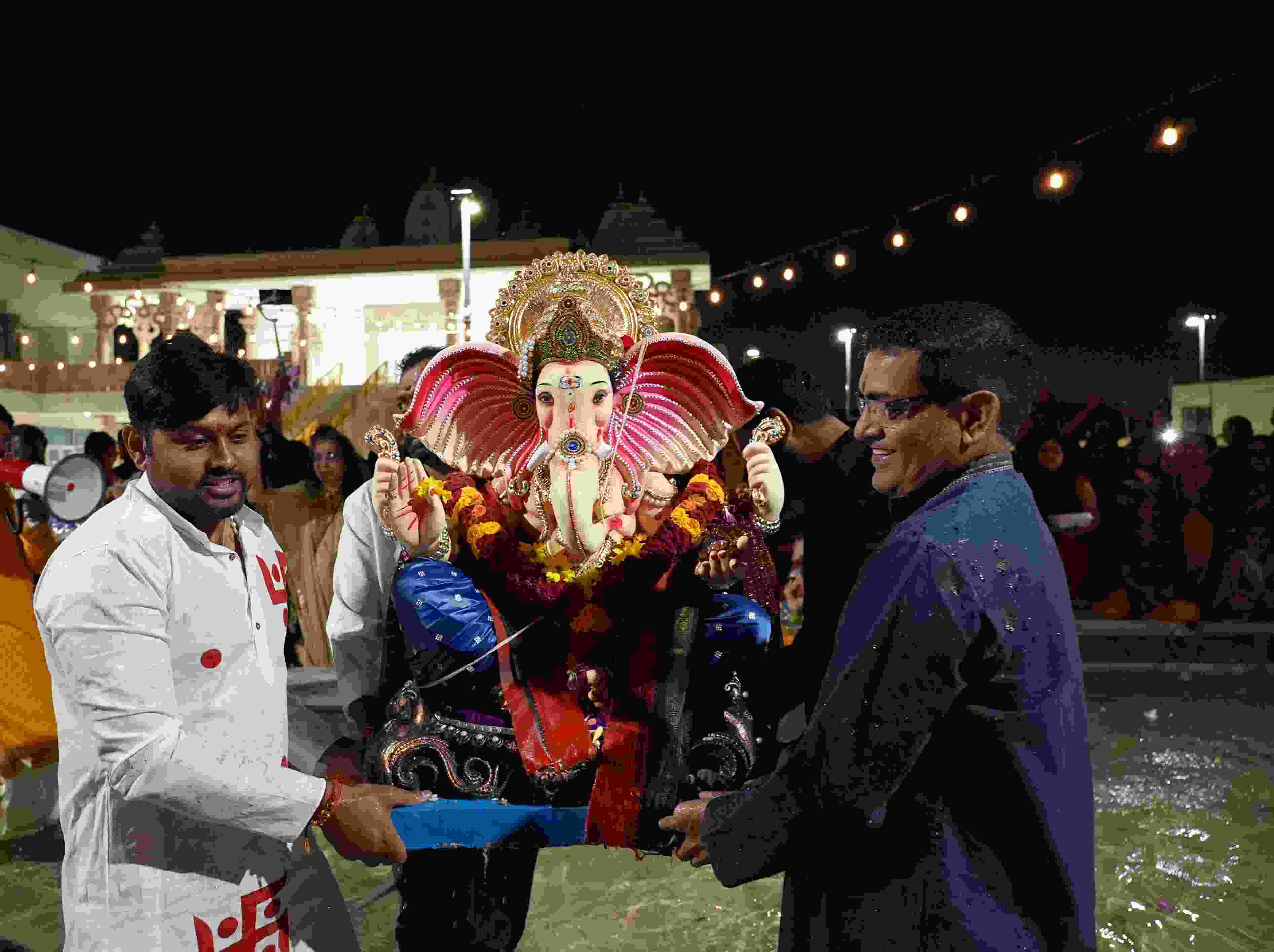
a. Allow children to gently place the idol in the water.
b. Encourage them to say a prayer of gratitude. - Post-Visarjan Reflection:
a. Gather together and discuss feelings.
b. Ask what they enjoyed, what they learned, and how they’ll remember Ganesha till next year.
Safety and Sensitivity with Children
- Keep Celebrations Safe: Avoid loud crackers or unsafe immersion practices. Choose calm, child-friendly environments.
- Respect Emotional Reactions: Some children may feel sad during Visarjan. Acknowledge their emotions and explain the spiritual meaning gently.
- Encourage Inclusivity: Ensure children see Visarjan as open to all, regardless of background.
Building Lifelong Lessons Through Visarjan
When celebrated mindfully, Ganesh Visarjan becomes a teaching ground for values children can carry into adulthood:
- Respect for traditions without blind following.
- Environmental stewardship.
- Gratitude and devotion.
- Strength to let go and embrace change.
- Joy in togetherness and community service.
Here’s a child-friendly story version of Ganesh Visarjan—something you could read aloud to children or even make into a puppet/illustrated tale
The Story of Ganesh Visarjan: Bappa Goes Home
Once upon a time, in a bright and joyful home, Lord Ganesha came to stay.
Children clapped, sang songs, and offered sweets. Ganesha listened to all their wishes—big and small. Some wanted good marks in school, some wished for toys, and some prayed for health and happiness for their family.
For ten days, Ganesha sat lovingly in their home, smiling with his round belly and twinkling eyes. He enjoyed the modaks (his favorite sweet), the songs, the flowers, and the laughter. The children felt so happy—like they had a best friend staying over.
But one morning, Ganesha said gently,
“My dear little friends, I must go now. My parents, Lord Shiva and Mother Parvati, are waiting for me at Mount Kailash. Just like you go back to school after holidays, I too must return.”
The children’s eyes filled with tears. “But Bappa, we don’t want you to leave. Please stay with us forever!”
Ganesha smiled kindly.
“I will always be in your hearts. When you remember me, when you chant my name, when you do good deeds, I am right there beside you. And every year, I will come back to your home. Will you promise me something?”
The children nodded eagerly.
“Promise me you will share your sweets, help your parents, love your friends, and take care of nature. That is the best gift you can give me!
The children promised with big smiles.
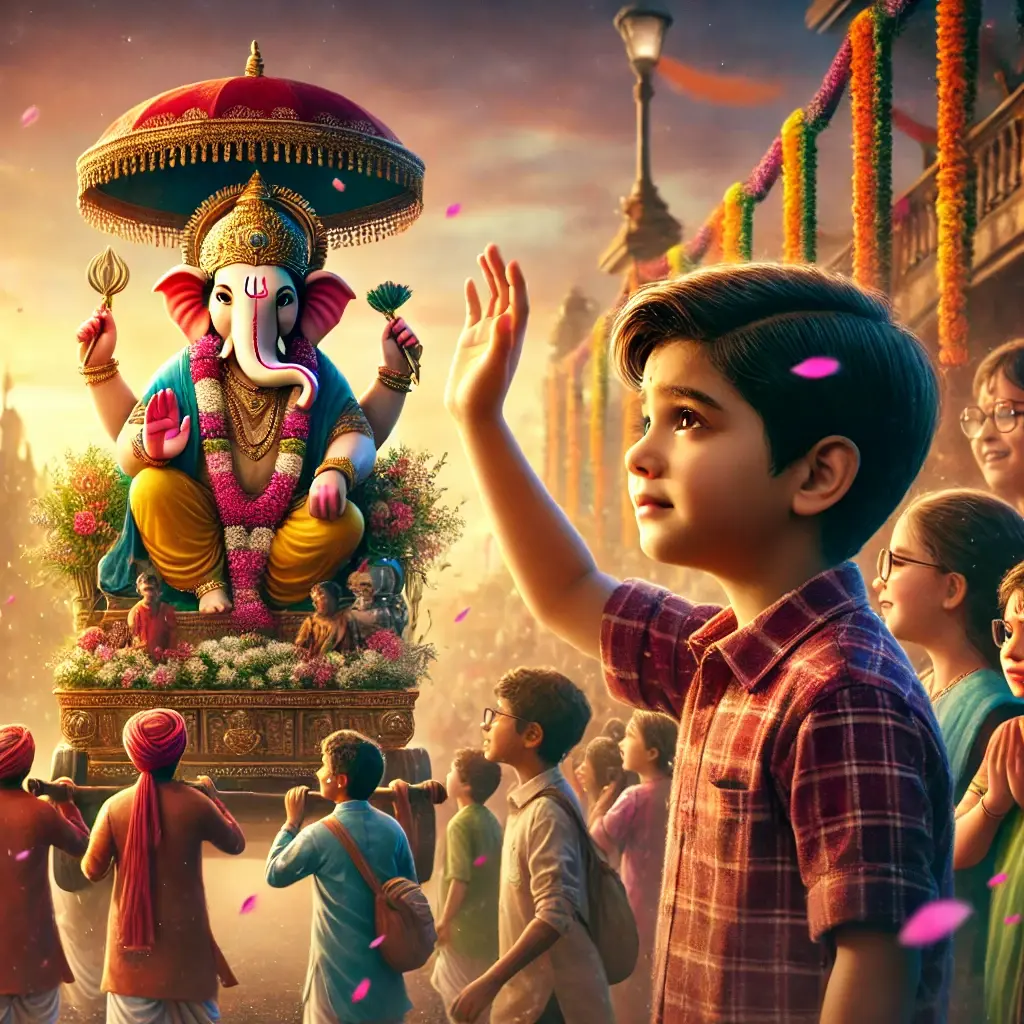
So, with drums beating and voices singing “Ganpati Bappa Morya!”, they carried Ganesha lovingly to the water. They placed flowers and sweets beside him. As he slowly went into the water, the children waved and called out,
“Come back soon, Bappa! We’ll be waiting!”
And though their eyes were a little wet, their hearts felt light and happy—because they knew their beloved Ganesha would return, bringing new blessings next year.
✨ Moral of the Story:
- Ganesha teaches us that saying goodbye is not the end. It means he lives in our hearts and will always return.
- He shows us how to celebrate with joy, let go with love, and remember to live with kindness and wisdom.
Here’s a rhyming poem for children about Ganesh Visarjan
Ganesh Visarjan Poem for Kids
Bappa came with love so bright,
Filling our home with joy and light.
Modaks, sweet and flowers fair,
Songs of praise were in the air.
Ten days long, we laughed and prayed,
With Ganesha’s smile, our worries swayed.
Now he says, “It’s time, my dear,
I’ll come again, the next new year!”
Ganpati Bappa, wise and kind,
You stay forever in our mind.
We’ll help, we’ll share, we’ll learn each day,
That’s the promise we children say.
Into the water, with hearts so true,
We send our love, Bappa, to you.
“Ganpati Bappa Morya!” we cheer,
“Come back soon, bring blessings near.
Conclusion
Ganesh Visarjan is not just about immersion—it is a journey of faith, joy, and valuable life lessons. By involving children in every step, from preparation to immersion, we transform the festival into an educational, spiritual, and joyful experience. In doing so, children not only inherit cultural traditions but also imbibe values of devotion, sustainability, empathy, and resilience. Through stories, rituals, crafts, and celebrations, Ganesh Visarjan can truly become a classroom of life, where traditions are honored and values are lived.
Call to Action

"Swami Mukundananda Official Youtube Channel."
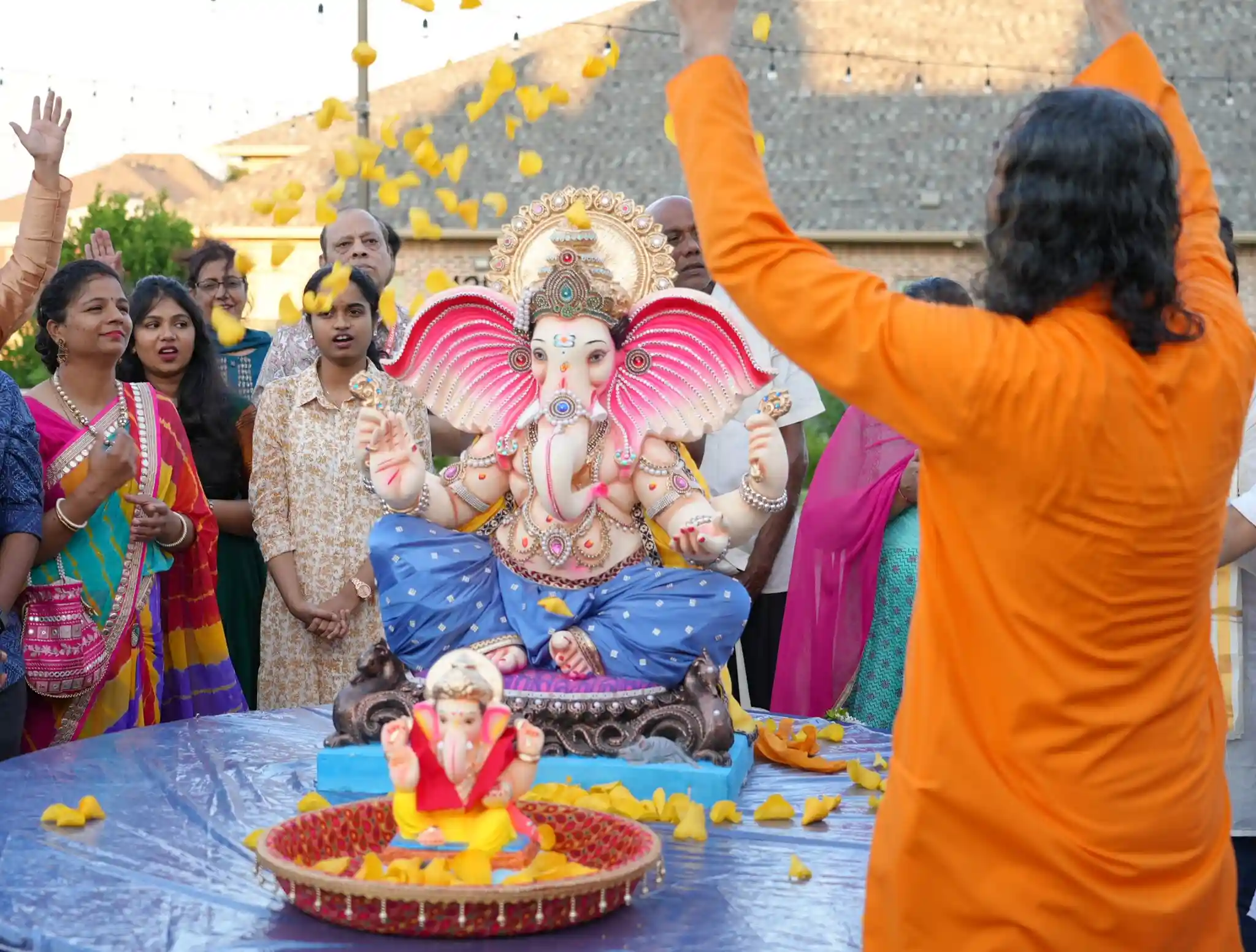
Ganesh Chaturthi Mahotsav 2025
Radha Krishna Temple of Dallas
Celebrate the divine presence of Lord Ganesha at the Radha Krishna Temple of Dallas (Allen)! Join us for Ganesh Chaturthi, soul-enriching Kirtans, Aarti, Modak Making, and more!
✨ Event Highlights ✨
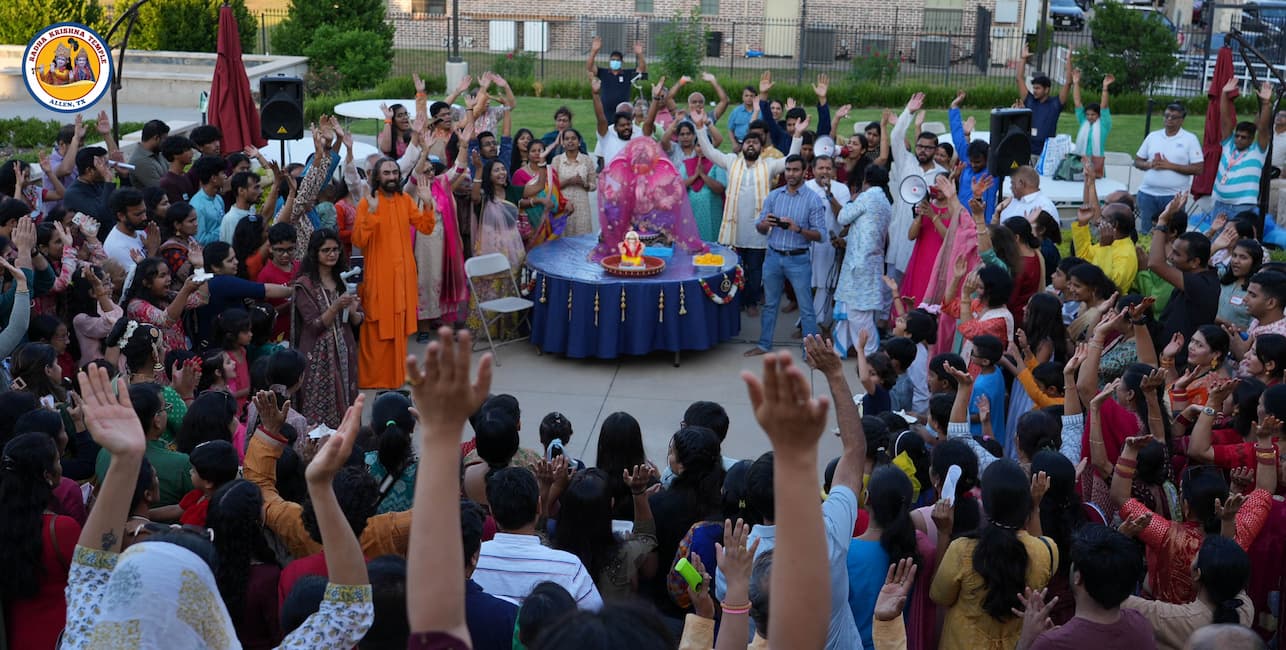
Ganesh Sthaapana & Pooja
Sacred installation and collective worship with powerful Vedic mantras.
Join Us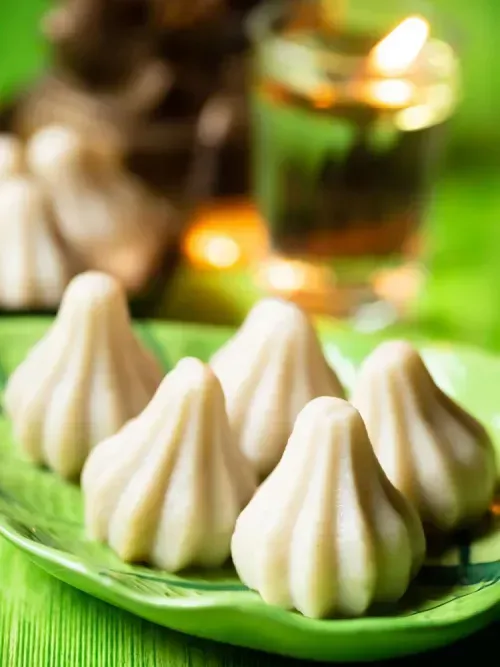
🎁 Sponsorship Opportunities
Support the event by sponsoring Pooja, Mahaprasad, or Grand Offerings. Your contribution helps keep this divine tradition alive!
🪔 Bring flowers, fruits, and prasad • 🙏 Become a Yajman • 🎁 Sponsor a Seva
FAQs
1. What is Ganesh Visarjan, and why is it celebrated?
Ganesh Visarjan is the ritual of immersing Lord Ganesha’s idol in water at the end of Ganesh Chaturthi. It symbolizes sending Ganesha back to Mount Kailash, reminding us that while the idol goes, Ganesha always stays in our hearts.
2. How can children understand the meaning of Ganesh Visarjan?
Through stories and poems, children can learn that Visarjan is not about loss but about love. Ganesha teaches us to let go happily, knowing he will return each year and is always with us in spirit.
3. Why do we sing or recite poems during Ganesh Visarjan?
Singing chants, bhajans, or poems adds joy and devotion to the farewell. For children, rhymes and songs make the celebration fun, memorable, and easy to participate in.
4. What values can children learn from Ganesh Visarjan?
Children learn sharing, kindness, respect for nature, and the importance of saying goodbye gracefully. They also understand that festivals are about community, love, and spiritual growth.
5. How can we make Ganesh Visarjan child-friendly at home?
Parents can tell simple stories, teach short rhyming chants, prepare eco-friendly idols, and organize small processions at home. Fun activities like coloring, singing, or making modaks help children connect more deeply with the festival.
Did You Know? Fun Facts About Lord Ganesha 🌟
- Ganesha loves sweets! 🍬
His favorite sweet is the modak, which is why families make them during Ganesh Chaturthi. It’s said that Ganesha can never resist a bowl of modaks! - The little mouse is his big helper! 🐭
Ganesha rides on a tiny mouse called Mushakraj. The mouse shows us that even the smallest creature can do big things with devotion. - He wrote the Mahabharata! ✍️
When Sage Vyasa wanted to write the great epic Mahabharata, Ganesha agreed to write it down — but only if Vyasa recited it without stopping! - Why is his tusk broken? 🦷
One story says Ganesha broke his own tusk to use it as a pen while writing the Mahabharata. That’s why he’s also called Ekadanta (the one with one tusk). - He is the god of beginnings! 🌅
Before starting any puja, journey, or new work, people first pray to Ganesha. That’s why we say, “Vighnaharta” — the remover of obstacles. - Many names, one Ganesha! 🌸
Did you know Ganesha has 108 names? Some are Ganapati, Vinayaka, Lambodara, and Gajanan. Each name praises one of his special qualities. - Ganesha teaches balance! ⚖️
Once, he and his brother Kartikeya had to race around the world. Kartikeya flew off on his peacock, but Ganesha simply walked around his parents, Shiva and Parvati, saying, “For me, my parents are my world!” 💖
✨ These fun facts can be read aloud to children during Visarjan to keep them curious, joyful, and connected with the stories of Lord Ganesha.
References
- Rigveda & Yajurveda – Early hymns that mention Ganapati as the remover of obstacles.
- Ganapati Atharvashirsha – A Sanskrit text dedicated to Lord Ganesha, explaining his divine attributes and symbolism.
- Puranic Stories (Skanda Purana, Mudgala Purana, Brahma Vaivarta Purana) – Traditional legends about Ganesha’s birth, the broken tusk, and his wisdom.
- Vyasa’s Mahabharata – References to Ganesha as the divine scribe who wrote down the great epic using his tusk as a pen.
- “Ganesh Chaturthi: Festival of Prosperity” – Government of Maharashtra Cultural Portal – Guides on the history and celebration practices of the festival.
- Oral Tradition & Family Practices – Poems, songs, and rhymes passed down through generations during Ganesh Chaturthi celebrations in India.
- Children’s Literature on Ganesha – Amar Chitra Katha comics and illustrated books that retell Ganesha’s stories in simple, engaging ways.

